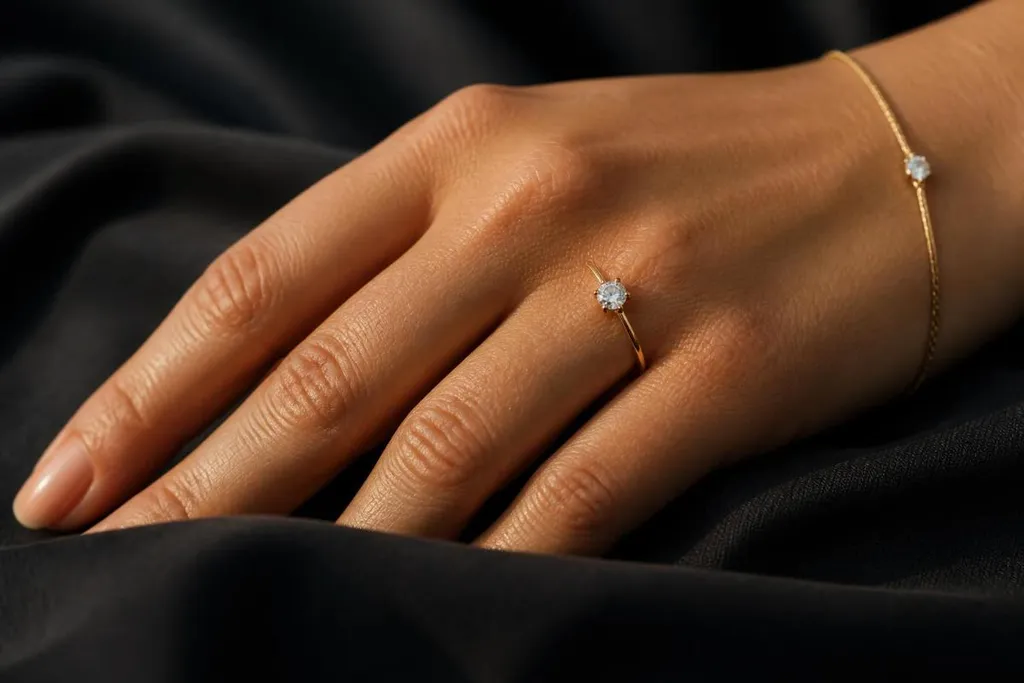
Moissanite is often discussed in the context of engagement rings, yet its distinctive light performance translates just as effectively into earrings, necklaces, bracelets and other fine jewellery. Its combination of brilliance and colourful fire can give relatively restrained designs considerable presence, making it useful for everything from everyday pieces to jewellery chosen for anniversaries, birthdays and other milestones.
For anyone looking to order moissanite fine jewellery from Lily Arkwright, the most important consideration is how that brilliance should work within the piece. A pair of studs concentrates light close to the face, while a bracelet distributes sparkle across the wrist. Pendants create a single focal point, and more decorative designs can use multiple stones for greater impact. Choosing well means matching stone scale, setting and precious metal to the way the jewellery will actually be worn.
Why Moissanite Works Beyond Engagement Rings
Moissanite has a high refractive index and is known for producing strong brilliance alongside noticeable spectral flashes. In fine jewellery, those characteristics become particularly effective when stones are positioned where movement continually changes the light entering them.
Earrings are a good example. Even a simple stud can appear lively as the wearer turns their head. Drop designs introduce additional movement, making the flashes more noticeable.
Bracelets use repetition instead. A sequence of moissanite stones creates numerous points of light across the wrist, particularly as the hand moves. Pendants provide a more controlled effect, concentrating attention on one stone or a small arrangement at the neckline.
Durability adds to the appeal. At approximately 9.25 on the Mohs hardness scale, moissanite has excellent resistance to scratching, making it suitable for jewellery intended for frequent wear.
The surrounding setting still matters, however. Precious metal, claws, links and clasps require sensible care regardless of the gemstone's hardness.
Choose Stone Size According to the Jewellery Type
Stone scale should be judged in relation to the complete design rather than treated as an isolated specification.
Larger moissanite stones can work beautifully in earrings or pendants because those pieces often need a defined focal point. Someone might prefer a larger pair of studs not simply for greater size, but because they usually wear no necklace and want the earrings to provide the principal jewellery detail.
A bracelet requires different reasoning. Using numerous substantial stones can create a highly expressive piece, while smaller stones produce a finer line of consistent brilliance that may be easier to combine with a watch or other bracelets.
The same principle applies to multi-stone necklaces. Increasing every stone can alter the entire visual weight of the piece, not merely make it more sparkling.
Consider where the jewellery will sit, what it will be worn beside and whether it is intended as an everyday foundation or an occasional statement.
Let Precious Metal Shape the Overall Character
Metal colour can noticeably influence the appearance of moissanite jewellery.
Platinum and white gold provide a cool backdrop that allows colourless moissanite to create a cohesive, bright effect. The metal can visually recede between stones, particularly in designs where continuous sparkle is the priority.
Yellow gold introduces warmer contrast. This can make the outline of the setting more visible and gives even a simple moissanite piece a traditional fine-jewellery character.
Rose gold offers a softer alternative, creating a warm setting around a gemstone known for energetic light performance. That contrast can be particularly attractive in restrained pendants and earrings.
Existing jewellery provides a practical reference point. Choosing a metal that relates to frequently worn rings, watches or necklaces makes a new piece easier to incorporate, although intentional mixed-metal styling can work equally well.
Build Versatility Through Styling and Care
Moissanite fine jewellery is most useful when pieces can move between occasions.
Stud earrings and simple pendants can provide everyday sparkle, while tennis-style bracelets or larger gemstone designs can transition easily into evening wear. Layering offers further flexibility, although pieces should differ enough in scale or length to avoid visual clutter.
Regular cleaning is important because skin oils, cosmetics and lotions can reduce apparent brilliance. Gentle cleaning helps restore the crisp light performance that gives moissanite much of its character.
Settings and clasps should also be inspected periodically, especially on bracelets and frequently worn pieces that encounter greater physical contact.
Appropriate storage prevents gemstones and precious-metal surfaces from rubbing against neighbouring jewellery.
Final Thought
Moissanite's place in fine jewellery extends comfortably beyond the engagement ring. Its combination of durability, brilliance and distinctive fire can work across earrings, pendants, bracelets and other designs without requiring excessive complexity.
The strongest pieces use those qualities deliberately. Choose stone size according to the jewellery type, select metal with the wider collection in mind and prioritise settings suited to the intended frequency of wear. The result can be fine jewellery with enough brilliance to mark an important occasion and enough versatility to remain relevant long afterwards.