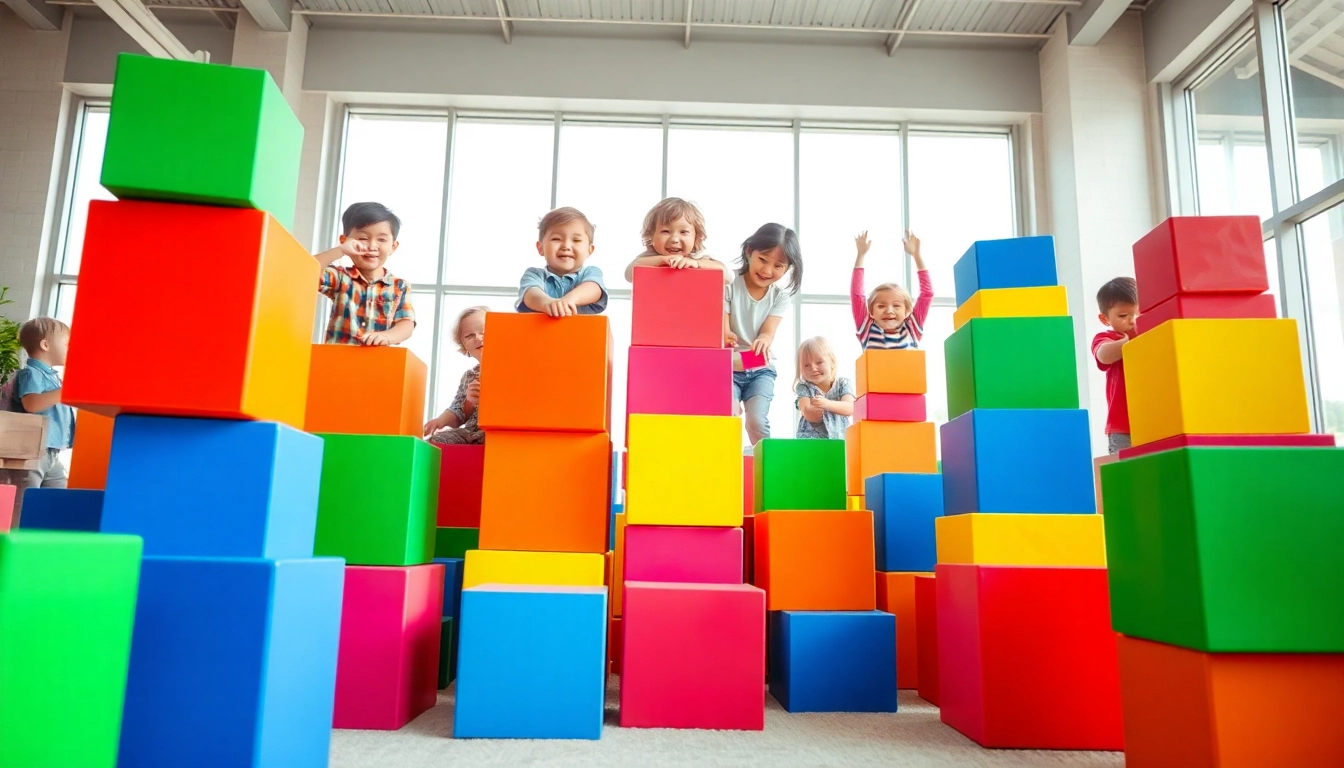
Understanding the Educational Benefits of Giant Building Blocks
Giant building blocks are more than just toys; they are an excellent resource for fostering a wide array of educational benefits among children. Through tactile play and exploration, these large blocks promote cognitive, social, and creative development in playful environments. In this guide, we'll delve deeper into how giant building blocks can transform playtime into rich learning experiences. If you'd like to learn more about the engaging possibilities these tools offer, discover more about their potential in childhood development.
Cognitive Development Through Play
The link between play and cognitive development is well-documented. When children engage with giant building blocks, they exercise critical thinking and problem-solving skills. They learn to visualize structures, strategize their construction steps, and manage the spatial relationships between different pieces.
Moreover, observational studies suggest that play with building blocks can enhance mathematical understanding. Children begin to grasp basic concepts such as symmetry, balance, and measurement, laying a foundation for more complex mathematical theories as they grow. As they build, they also develop fine motor skills and hand-eye coordination, which are vital in a child’s early years.
Enhancing Social Skills and Teamwork
Playing with giant building blocks encourages children to collaborate and communicate. Whether building solo or as part of a group, kids learn to share ideas, negotiate roles, and manage differing opinions during play sessions. This teamwork fosters not only social skills but also emotional intelligence, as they learn to navigate friendships, conflicts, and cooperation.
Research indicates that children who regularly engage in collaborative play are better equipped to manage social situations later in life. The experience of working together towards a common goal empowers them to become effective communicators and team players.
Encouraging Creativity and Imagination
The sheer versatility of giant building blocks sparks creativity. Children are not bound to any specific form and can build anything their imagination conjures up. From fantastical castles to complex bridges, the creation possibilities are virtually limitless.
Imaginative play is crucial for the development of creative thinking skills. As children conceptualize and execute their designs, they learn to innovate and express themselves. This creative process has been shown to enhance cognitive flexibility, which allows children to think outside the box in various aspects of their lives.
Safety Considerations for Indoor Play with Building Blocks
As engaging as giant building blocks can be, safety must always be a priority during play. Understanding the specific safety considerations for indoor play will help create a secure environment for children to explore their creativity.
Selecting Age-Appropriate Blocks
When choosing giant building blocks, it’s essential to consider the age of the intended users. Blocks that are too small may pose choking hazards for younger children, while those that are excessively large might be cumbersome for smaller hands. Look for sets that cater to specific age ranges and ensure they comply with safety standards.
Additionally, softer materials or those designed to withstand the rigors of playful use can provide extra safety. Inflatable or foam blocks, for example, can often mitigate injury risks, especially in active play scenarios.
Creating a Safe Play Environment
A safe play area is vital for minimizing accidents. Clear play spaces where blocks can be assembled without obstructions will help keep kids focused on their building activities. It's best to establish designated play zones with appropriate flooring to reduce falls and slips.
Consider adding safety mats and ensuring the area is free of sharp edges or hard furniture. Natural lighting can enhance visibility, and sufficient space to move around will allow children to play without feeling restricted.
Best Practices for Supervision During Play
Supervision is crucial during any playtime activity, particularly when children engage with large objects. Adults should keep a watchful eye on interactions, especially in group settings where excitement can lead to rough play.
Encouraging positive interactions and modeling safe ways to build will create a comforting atmosphere where children feel secure. Regularly checking in on play sessions to address any emerging conflicts or safety concerns also contributes to an enriching learning experience.
Engaging Activities to Maximize Fun with Building Blocks
To elevate the experience of playing with giant building blocks, a variety of activities can be introduced to keep children engaged and challenged.
Themed Building Challenges
Themed challenges can inspire creativity and imagination. Consider activities such as "build your dream house" or "create a fortress for a dragon." These challenges can also be tailored to educational themes, which ties learning goals into fun play sessions.
Providing a limited set of blocks for specific challenges can encourage better problem-solving and resource management skills, pushing children to think critically about their designs under constraints.
Collaborative Group Play Ideas
Fostering collaboration among children brings additional fun and valuable experiential learning. Activities such as team races to build specified structures can promote teamwork and communication. Assigning roles, such as designer, builder, or critic, can nudge children to express their ideas while learning to respect each contribution within the team.
Setting up exhibitions where children showcase their constructions invites appreciation and critique, enhancing their social interactions and communication skills.
Incorporating Storytelling with Structures
Combining storytelling with building can transform the activity into a rich narrative experience. Encourage children to construct the settings for their stories—like castles, forests, or cities—and then invite them to narrate tales about their creations. This multi-faceted approach enhances language skills, creativity, and critical thinking.
Moreover, storytelling can help children connect emotionally with their structures, fostering a deeper level of engagement and ownership over their creative pursuits.
Maintenance and Care of Giant Building Blocks
Regular maintenance and care for giant building blocks ensure longevity and safe use. Following best practices will keep your blocks in prime condition for adventures to come.
Cleaning and Sanitizing Procedures
To keep building blocks hygienic, they should be cleaned regularly. Most large blocks can be wiped down with mild soap and water, while some materials may require special cleaning solutions. Before cleaning, always consult product labels for specific recommendations to avoid damage.
Sanitizing blocks, especially those used by young children, is crucial in preventing the spread of germs. Use an approved disinfectant safe for the materials of the blocks. After sanitizing, allow ample time for blocks to dry completely before being used again.
Repairing Damaged Blocks
Accidents happen during play, but knowing how to repair damaged blocks can extend their usability. Inspect blocks regularly for wear and tear, and address minor damages promptly. For instance, small cracks can often be fixed with appropriate adhesives specifically formulated for the materials.
In instances of severe damage where blocks cannot be repaired, assess whether they can be safely recycled or repurposed into new toys—keeping sustainability in mind.
Storing Blocks for Longevity
Proper storage is essential in ensuring the longevity of giant building blocks. Designate a clear storage area where blocks can be kept free from excessive moisture and direct sunlight, as both can deteriorate the materials over time.
Utilizing storage bins or racks specifically designed for giant toys helps maintain organization. Stack blocks safely to minimize risk of collapse, which can lead to damage or accidents.
Frequently Asked Questions
What age group is best suited for giant building blocks?
Giant building blocks are generally great for kids aged 2 and older. For younger children, ensure that the blocks are large enough to eliminate choking hazards.
How can I encourage teamwork during building activities?
Set up collaborative projects with specific goals, assign roles within the teams, and encourage communication to foster teamwork during building activities.
Where can I find the best giant building blocks?
Quality giant building blocks can be found at specialized toy stores, educational supply retailers, or licensed online platforms that ensure safety and durability.
Are giant building blocks safe for indoor use?
Yes, as long as they are age-appropriate and made from soft materials. Always supervise play and ensure adequate space to minimize accidents.
What types of building challenges can I create?
You can create themed challenges such as "build a bridge," "create a vehicle," or "design a zoo," to instill creativity while incorporating learning objectives.